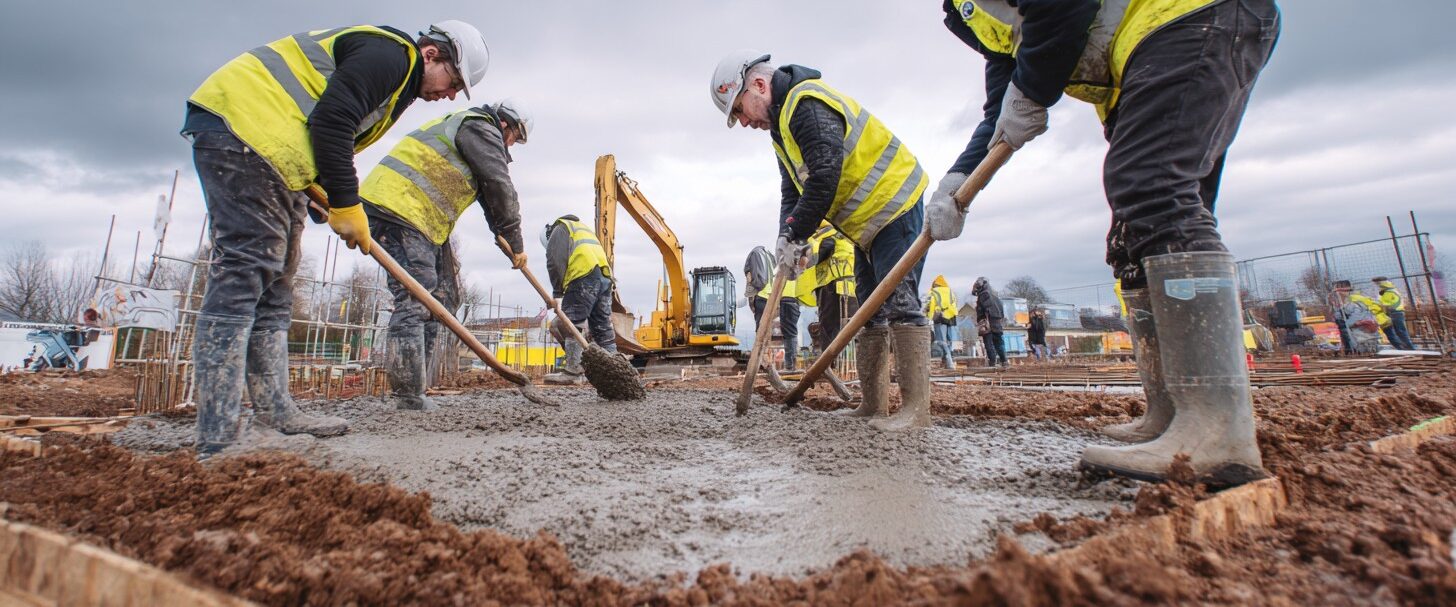
On large groundworks packages, the cost of materials moving on and off site is one of the larger lines in the cost plan. Imported fill, removed excavation arisings, granular sub-base for road construction and topsoil for landscape areas all carry haulage cost, disposal cost and material cost. Where material can be reused on site rather than imported and exported, the savings can be substantial without compromising the engineering performance of the works.
The opportunity is not always available, but it is more often available than it is taken. Schemes with significant cut and fill should, at the design stage, be modelled for net material balance. Where excess excavated material can be repurposed as engineered fill behind retaining structures, as bulk fill in non-load-bearing areas, or as growing medium for landscape areas, the resulting reduction in haulage and disposal cost is direct.
The barrier to taking the opportunity is usually engineering risk. Reusing excavated material requires confidence that the material is suitable for the purpose proposed. Made ground excavated from a brownfield site may not be suitable for engineered fill without treatment. Excavated clay may not be suitable for granular sub-base. The wrong material in the wrong location can result in settlement, drainage failure or subsequent ground instability.
This is where the groundworks contractor’s experience matters. A contractor with a strong technical understanding of UK ground conditions can specify what materials can be reused, where they can be reused, in what condition, and what processing or testing is required. A contractor without that experience defaults to imported material across the board, with the costs that follow.
Globe Civil Engineering brings this technical view to every scheme of sufficient scale. The starting position on any large groundworks package is to model material balance against the cut and fill schedule. Where material can be retained on site for use, the conditions for reuse are specified in the method statement and the testing regime is built into the programme. Where material has to be imported or exported, that decision is made on engineering grounds rather than by default.
The savings on a meaningful scheme are not trivial. Reducing imported fill by even fifteen per cent on a scheme requiring ten thousand cubic metres of fill removes significant transport movements, the associated carbon, and substantial cost. Reducing excavation arisings going to landfill or licensed tip removes disposal cost and disposal-permit risk. The combined effect can move groundworks margin materially without changing the engineering of the works.
There are environmental and planning benefits beyond cost. Schemes operating in sensitive locations, including conservation areas and locations with restricted vehicle movement consents, often have planning conditions that limit haulage volumes. Reusing material on site can be the difference between meeting and breaching those consents. The same is true for carbon reporting on schemes where the developer is producing a scheme-level carbon assessment.
Material reuse also matters for the works programme. Importing fill depends on supplier availability, which can become tight during periods of high demand across the region. Reused material is on site already, which removes that supply risk. On schemes where the programme is tight against bulk earthworks, removing supplier dependency from the critical path is a meaningful operational benefit.
Globe Civil Engineering’s testing protocols for reuse follow the standard CIRIA and SHW frameworks for material classification and acceptance. Where reuse requires processing, including crushing, screening or stabilisation, the processing arrangement is specified at design stage and built into the programme. Where reuse requires demonstrable testing against acceptance criteria, the testing schedule is part of the QA plan, not an afterthought.
For developers and QSs, the practical question to raise at design and tender stage is whether the groundworks contractor has assessed material reuse opportunities and what the proposed approach is. The answer will distinguish between contractors who treat the cost plan as fixed and contractors who treat it as a starting point that can be improved through engineering judgement.
Talk to Globe Civil Engineering To discuss material reuse and earthworks cut and fill on your scheme on your scheme, contact Globe Civil Engineering on 01223 890727 or email enquiries@theglobegroup.co.uk.