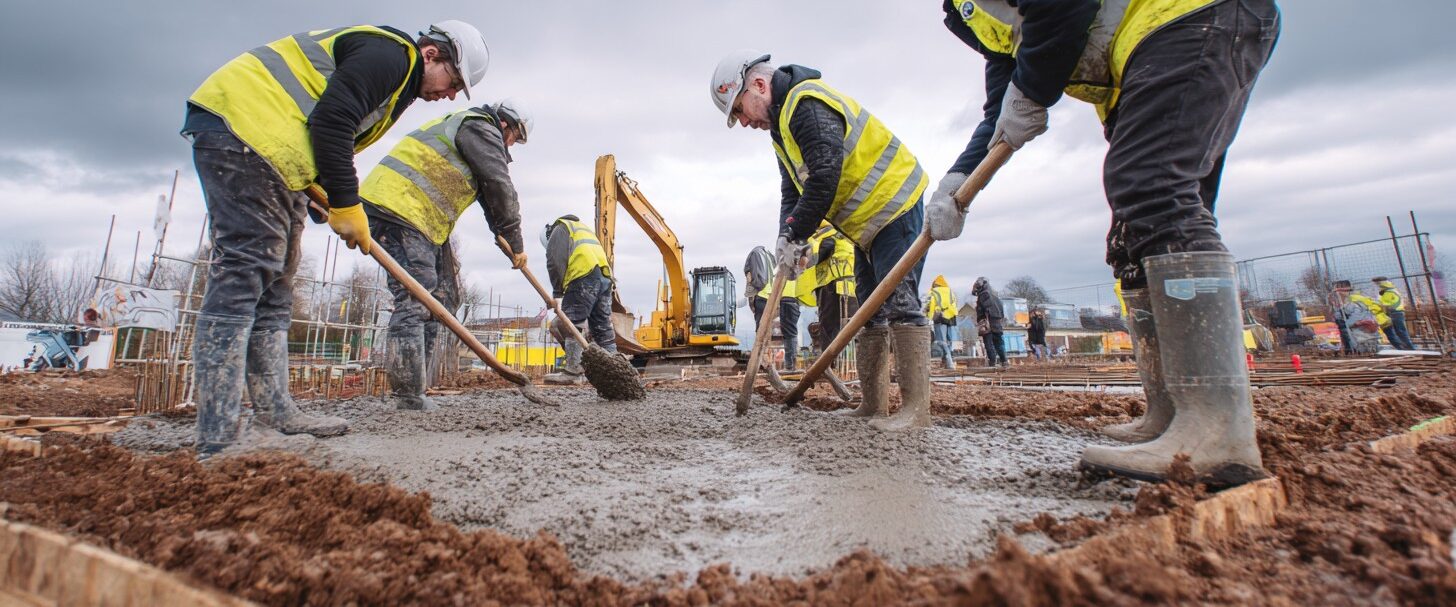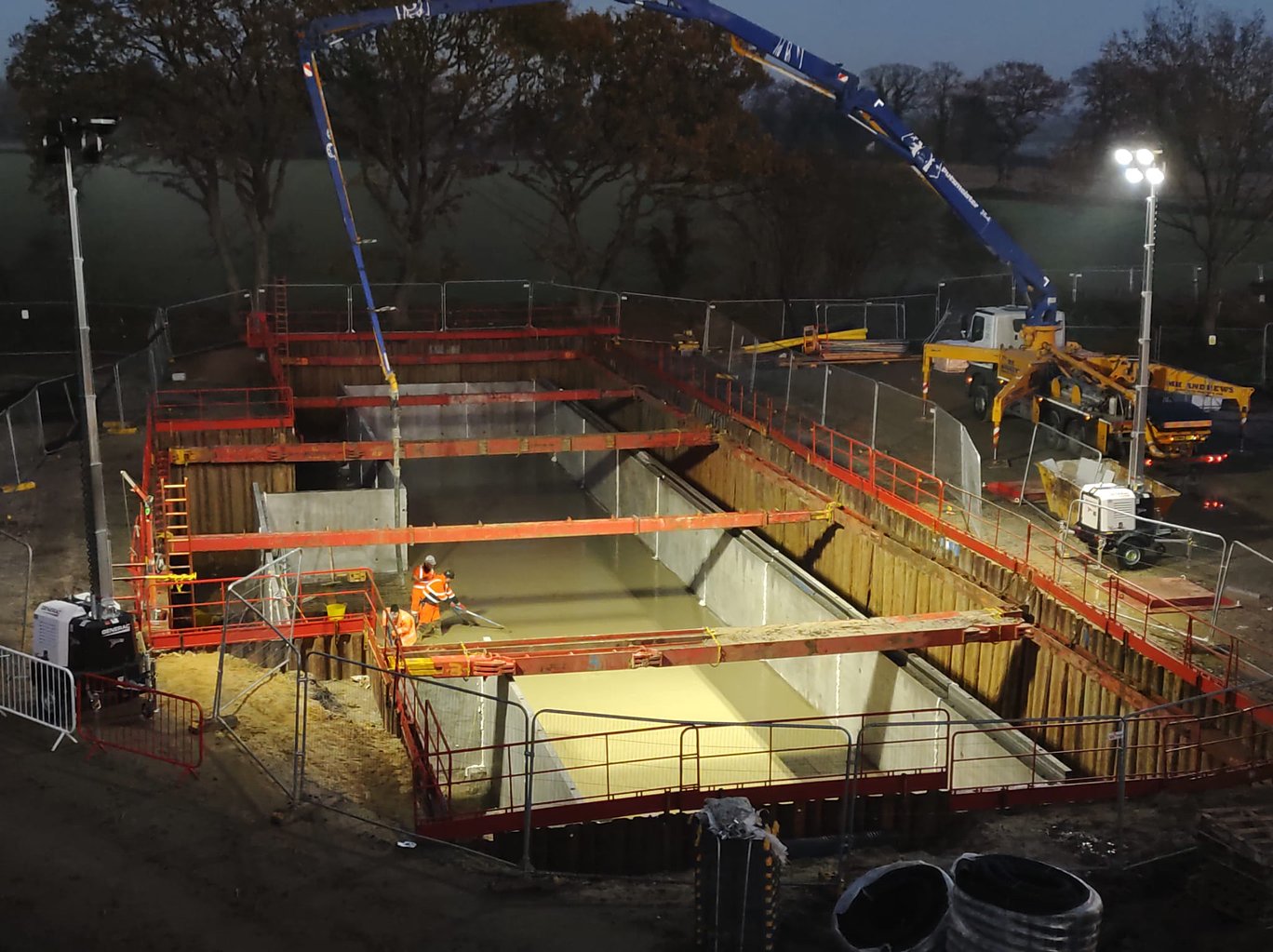
Civil engineering works carried out on a greenfield housing site involve their own complexities, but the operational environment is at least controllable. The site is the contractor’s domain. Access, sequencing, and protection are managed against a known plan. Civil engineering works carried out in live operational environments are a different proposition. The site is shared with users, traffic, businesses, or residents who continue to operate while the works are underway. The constraints are external and largely fixed. The contractor’s job is to deliver the work without disrupting the operation around it.
Where this work arises
GCE delivers civil engineering works across housing developments, commercial schemes, industrial sites, and education projects. Within these sectors, live operational environments include phased housing schemes where earlier plots are already occupied, commercial sites where business operations continue throughout the build, education projects where teaching continues during term time, and industrial sites where production cannot be paused for the duration of the works.
Each of these contexts brings its own constraints. Phased housing schemes require access management for residents and protection of completed plots from construction traffic and dust. Commercial sites require coordination with the client’s operational hours and customer access. Education projects require absolute predictability around term dates and safeguarding of occupied buildings. Industrial sites require coordination with production schedules and protection of operational plant.
Planning around the operational environment
Successful delivery in a live environment starts at planning stage. The construction programme has to be built around the operational programme of the host environment, not the other way around. Work that produces noise, dust, vibration, or vehicle movements has to be scheduled to minimise disruption. Access routes for plant and materials have to be agreed with the operational owner and respected throughout. Pedestrian and vehicle segregation has to be maintained where members of the public, residents, or non-construction staff are sharing the area.
This planning is not a one-off exercise at the start of the contract. It needs to be revisited weekly as the work progresses and the operational environment changes around it. Schools have term dates, half-terms, and exam weeks. Commercial sites have peak trading days and seasonal busy periods. Phased housing developments have plot handovers and occupation dates that change the population on site week by week.
CDM 2015 obligations in live environments
Civil engineering works in live operational environments significantly increase the CDM 2015 risk profile. Members of the public, non-construction workers, and other contractors are present in or adjacent to the work area. The principal contractor’s duty to plan, manage, and monitor the construction phase to ensure health and safety extends to all these third parties, not just the construction workforce.
GCE’s approach in these environments is built around documented risk assessments and method statements that explicitly address third-party interaction. Pedestrian routes, vehicle movements, exclusion zones, and protective barriers are planned and recorded. Operative briefings cover the specific risks of working alongside members of the public. CSCS-carded operatives, with appropriate CPCS or NPORS certification for plant operations, work to documented procedures that protect both the operatives and the people sharing the environment.
Temporary works in live environments
Temporary works in a live operational environment carry higher consequence if they fail. A temporary works failure on a closed site is a programme issue. The same failure adjacent to an occupied building or a public route is a safety incident with potentially serious consequences. GCE’s approach to temporary works in live environments includes documented design, independent check where appropriate, regular inspection cycles, and clear sign-off before loading. The increased operational risk is matched by increased procedural rigour.
Communication with the operational owner
On any live environment scheme, the relationship with the operational owner — the school, the business, the housing association, the residents’ management company — is critical. Construction issues that would be routine on a closed site can become disputes if they are not communicated and managed proactively. GCE’s approach is built around regular structured communication with the operational owner: progress updates, lookahead programmes flagging upcoming disruption, and escalation routes for issues as they arise. This keeps the operational owner informed and in a position to manage their own users effectively.
Documentation and accountability
Documentation in live environments serves a dual purpose. It protects the construction programme by recording what was planned, what was delivered, and what variations occurred. It also protects the operational relationship by providing a clear record of communication, agreement, and incident management. Where disputes arise after completion, this documentation is what allows the developer or principal contractor to demonstrate that the work was managed appropriately.
Talk to GCE about your project
To discuss civil engineering delivery in a live operational environment, contact GCE on 01223 890727 or email enquiries@theglobegroup.co.uk.