Setting out is where every civil engineering project begins in practice. Before a single machine moves soil or a single length of drainage pipe is laid, the positions, levels, and dimensions that will govern everything built on that site need to be established accurately on the ground. Get setting out right and the project builds on a solid foundation — literally and commercially. Get it wrong and the consequences compound through every subsequent stage of the programme.
For developers and principal contractors, setting out is often invisible when it’s done correctly. It only becomes visible when something goes wrong — and by then, the cost of putting it right is rarely limited to the setting out itself.
What Setting Out Involves on a Residential Development
On a new build residential development, setting out establishes the position and level of everything that follows — plot boundaries, building footprints, road alignments, drainage runs, and sewer connections. The accuracy of that initial setting out determines whether the buildings sit where they’re supposed to, whether the drainage falls correctly to the outfall, and whether the roads and footpaths align with the adoptable highway standard that the local authority will require.
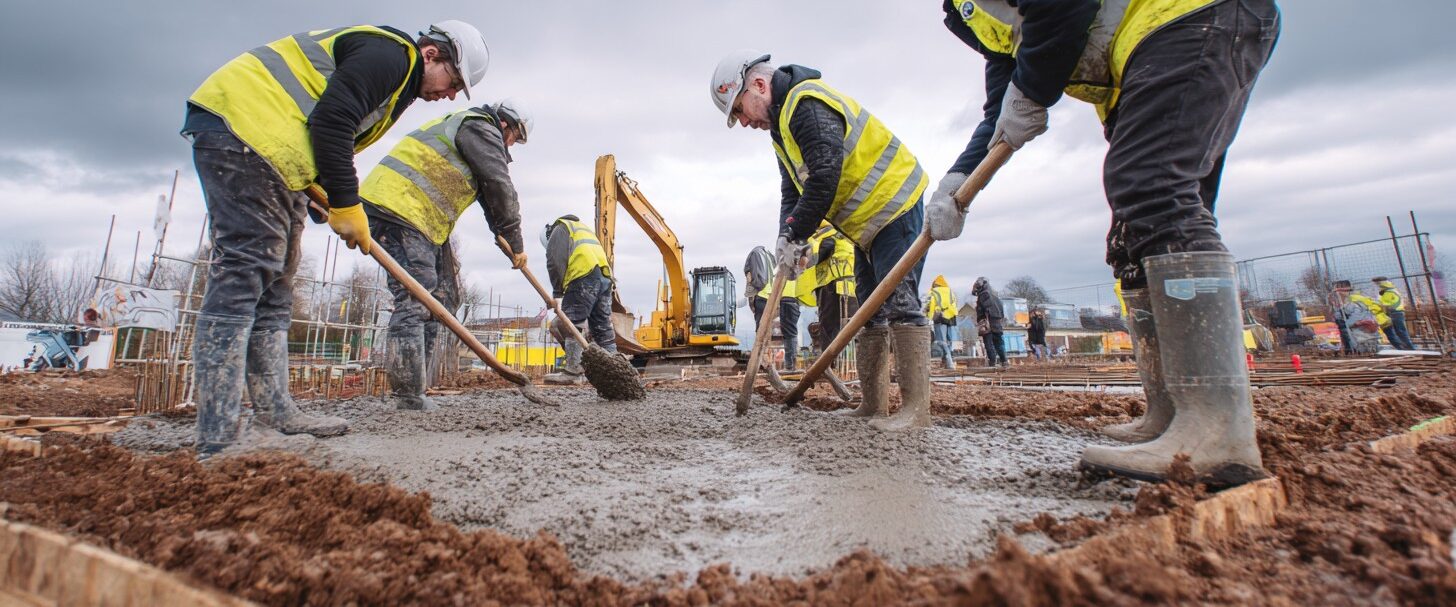
Setting out on a residential scheme isn’t a single exercise completed at the start of the project. It’s a continuous activity throughout the groundworks and civil engineering programme — establishing formation levels for each plot, setting drainage gradients, positioning manholes and inspection chambers, and checking levels at each stage before the next layer of construction goes on top.
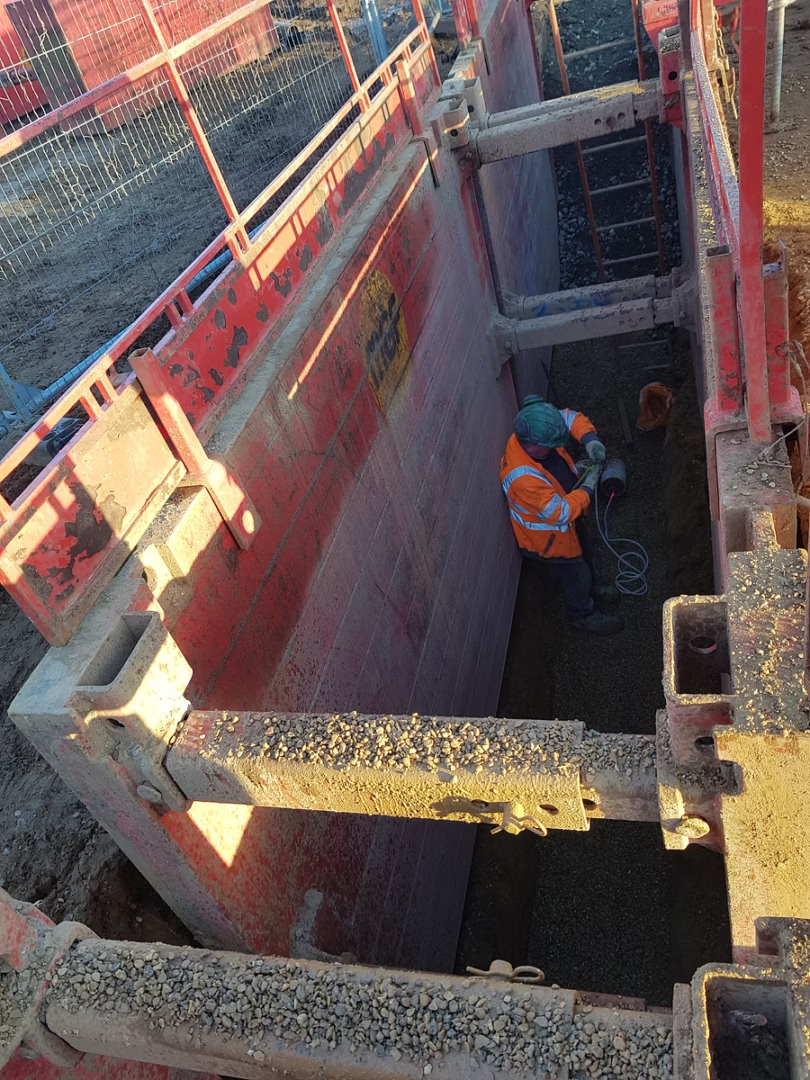
Globe Civil Engineering’s setting out process is managed by experienced site engineers using calibrated survey equipment, with checks built in at each stage of the programme. Formation levels are verified before sub-base goes down. Drainage gradients are checked before backfilling. Road levels are confirmed before surfacing. Those checks aren’t an additional overhead — they’re what prevents the far more expensive corrections that follow when errors are discovered later.
The Consequences of Setting Out Errors
The most significant thing about setting out errors is that they’re rarely self-contained. An error in the position of a building footprint affects the drainage run that connects to it. An error in a drainage gradient affects the manhole positions that serve it. An error in road levels affects the finished surface levels that need to tie into adopted highway.
On a phased residential development, setting out errors on early phases can propagate into later phases if they’re not identified and corrected before the infrastructure that later phases connect to is in place. By the time the error becomes apparent, the cost of correction has multiplied — because the work that was built on the incorrect setting out has to be undone before the correct position can be established.
For developers, the most commercially significant consequence of setting out errors is the impact on NHBC sign-off and highways adoption. NHBC inspectors check that buildings have been constructed in accordance with the approved plans and at the specified levels. Highways adoption requires that roads and footpaths meet the dimensional standards specified in the Section 38 or Section 278 agreement. Setting out errors that result in non-compliance with either of those requirements create remediation costs and programme delays that are entirely avoidable.
Setting Out in the Context of East Anglian Ground Conditions
On sites in East Anglia, accurate setting out has an additional dimension. The chalk and clay ground conditions characteristic of the region mean that formation levels can vary across a site in ways that aren’t always apparent from the initial ground investigation. Where the formation level at one end of a plot is in chalk and the other end is in clay, the sub-base compaction requirements and the drainage design both need to reflect those varying conditions.
Globe Civil Engineering’s familiarity with East Anglian ground conditions means that setting out on sites in the region takes account of those variations — identifying where the ground conditions change and adjusting the programme accordingly, rather than applying a uniform approach that may not reflect what’s actually in the ground.
To discuss setting out and groundworks on your next residential development, contact Globe Civil Engineering today.