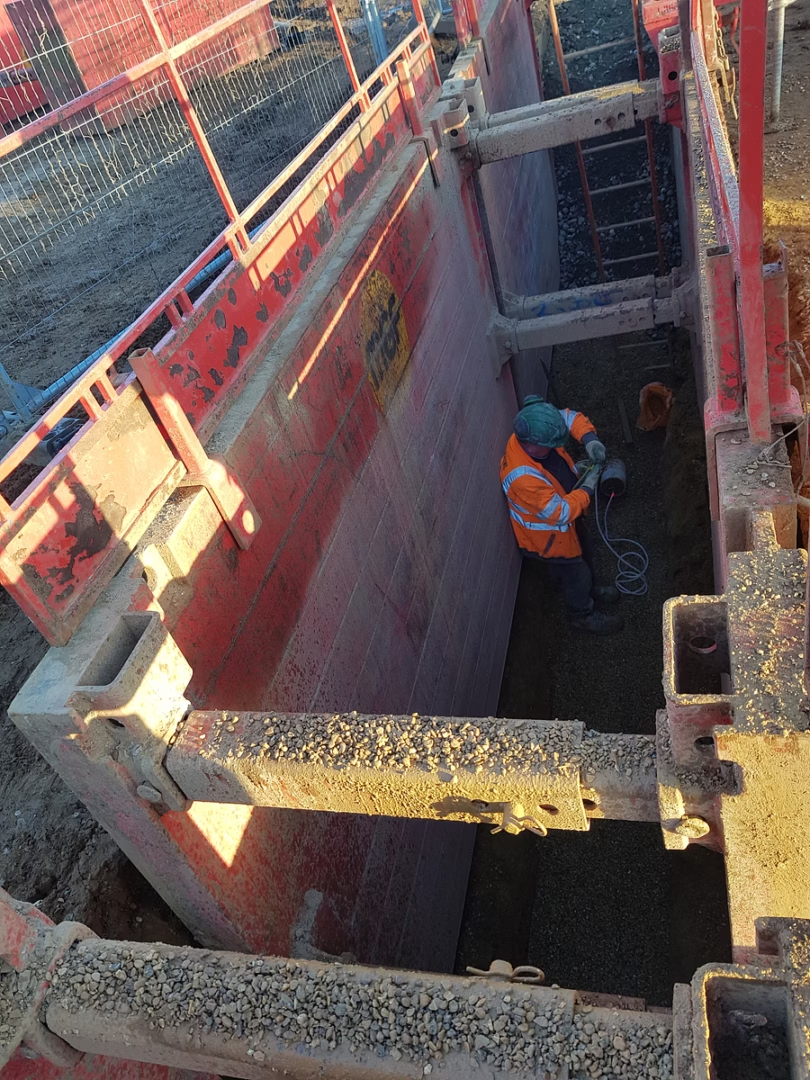
Quality assurance in civil engineering is not a back-office function. It’s a live operational discipline that runs throughout the groundworks and civil engineering programme — from the first formation sign-off to the final road surface and everything in between. Done properly, it protects the developer from the consequences of defective work, supports NHBC sign-off and highways adoption, and provides the documentation that demonstrates compliance when it’s needed.
Done poorly — or treated as a paperwork exercise to be completed after the fact — it provides none of those protections and adds cost without adding value.
For developers and principal contractors appointing civil engineering subcontractors, understanding what genuine quality assurance looks like in practice is useful context for evaluating whether the contractor they’re appointing is approaching it correctly.
What Quality Assurance Covers on a Civil Engineering Package
On a new build residential development, the civil engineering and groundworks package covers a wide range of activities — earthworks, drainage installation, sub-base construction, roads and footpaths, and the infrastructure that connects the development to the adoptable highway. Quality assurance across all of those activities involves verifying that the work meets the specified standard at each stage, before the next stage of construction proceeds.
The critical principle is that quality assurance is prospective, not retrospective. Checking that sub-base compaction meets the required standard before the road base goes down is quality assurance. Discovering that the sub-base doesn’t meet the required standard after the road has been surfaced is a quality failure — and an expensive one.
Globe Civil Engineering’s quality assurance process is structured around stage hold points — defined stages in the programme at which the work completed to that point is verified before the next stage begins. Formation levels are checked and signed off before sub-base is placed. Compaction testing is completed and recorded before the next layer goes down. Drainage installations are inspected and recorded before backfilling. These hold points are not optional additions to the programme — they’re built into the programme from the outset, because the cost of the hold points is always less than the cost of the failures they prevent.
Compaction Testing and Formation Sign-Offs
Sub-base compaction is one of the most consequential quality assurance activities on a residential development groundworks package. Roads and footpaths that haven’t been compacted to the required standard will fail under traffic loading — producing the surface failures and structural defects that lead to highways adoption disputes and warranty claims years after completion.
Compaction testing on Globe Civil Engineering’s projects is carried out using calibrated equipment, with test results recorded against the specific areas tested. That record provides the developer with a documented basis for the highways adoption application and a defensible position if questions arise about the road’s construction after adoption. It also provides the NHBC inspector with the evidence that the sub-base beneath the building plots was prepared to the required standard.
Formation sign-offs — the documented verification that the ground has been prepared to the correct level and bearing capacity before construction proceeds — serve the same function. They provide an auditable record of the condition of the ground at the point of handover from groundworks to the next trade, protecting both the developer and the civil engineering contractor if questions arise later about what was found and what was done about it.
Documentation That Supports NHBC and Highways Adoption
The documentation produced during the civil engineering programme is not just an internal quality record. It’s the evidence base for NHBC sign-off at the relevant inspection stages and for the highways adoption application at the end of the development programme.
NHBC inspectors checking groundworks on a residential development want to see that formation levels were verified, that sub-base compaction was tested, and that drainage installations were inspected before backfilling. Highways authorities processing an adoption application want to see compaction test results, materials certificates, and as-built drainage records. A civil engineering contractor who produces that documentation as a standard part of their quality assurance process makes those sign-off processes straightforward. A contractor who doesn’t creates a documentation gap that the developer has to fill — if it can be filled at all.
Globe Civil Engineering produces quality assurance documentation as a standard output of the programme — not as a separate exercise triggered by an imminent inspection. That documentation is available to the developer and principal contractor throughout the programme, not assembled at the point when it’s needed.