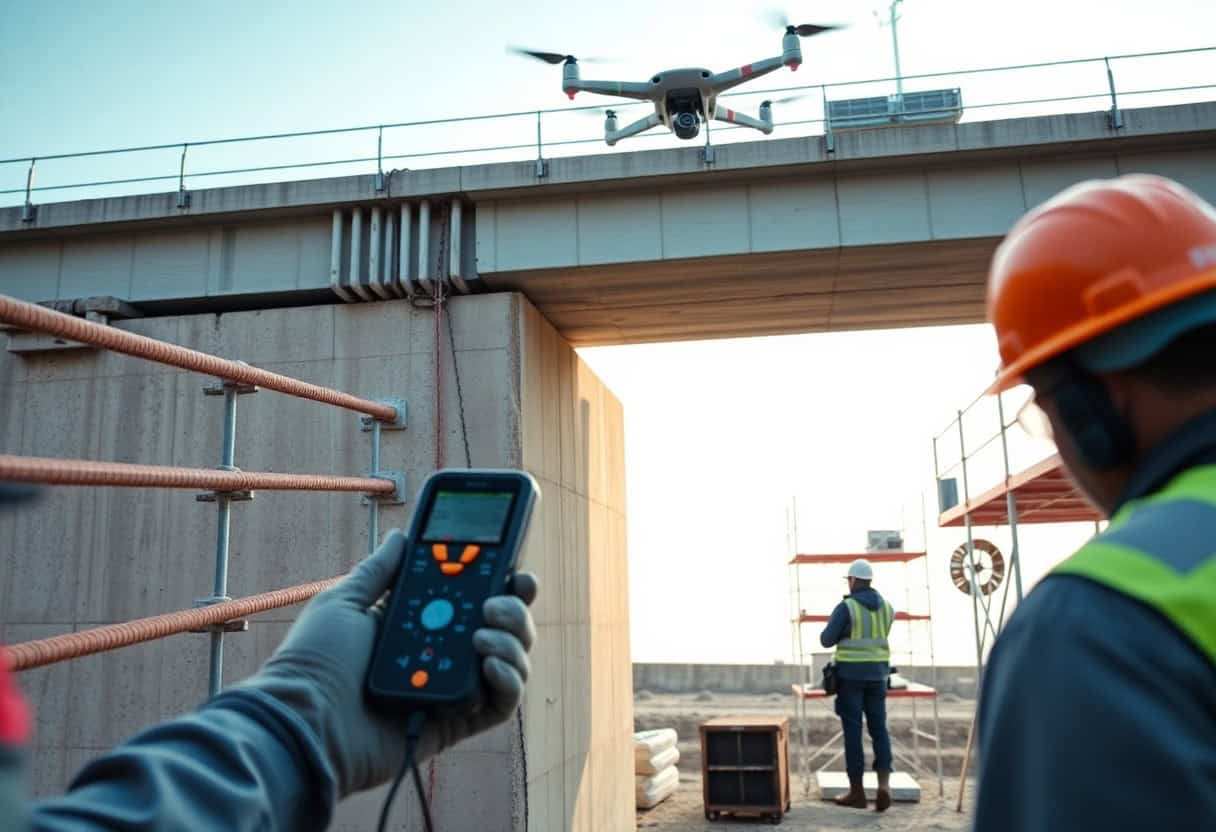
Just as a well-maintained bridge keeps traffic moving, planned maintenance lets you detect wear early, prevent catastrophic failure, and protect public safety; by scheduling inspections and repairs you extend asset life and reduce lifecycle costs, minimise disruption, and ensure resilient services for your community.
Key Takeaways:
- Reduces lifecycle costs by enabling early detection and repair, preventing costly emergency interventions and extending asset lifespan.
- Protects public safety and service continuity by minimising unplanned failures, reducing risk to users and avoiding prolonged outages.
- Maintains regulatory compliance and resilience by scheduling inspections, optimising resource allocation and preserving structural performance.
The Importance of Planned Maintenance
When you prioritise planned maintenance you intercept small defects before they become system-wide hazards. National Highways schedules principal inspections typically every two years, with routine visual checks every 6-12 months; adopting similar cadences for your assets often limits corrosion, water ingress and fatigue growth. For example, early detection of hairline cracks on a steel bridge can prevent a >£1m reconstruction and remove the risk of catastrophic failure.
Preventing Infrastructure Deterioration
By scheduling targeted interventions you slow material decay: replace sealants and expansion joints every 10-20 years, apply cathodic protection to steel piles and clear drainage annually to prevent freeze-thaw damage. In coastal locations salt spray can accelerate corrosion by up to threefold, so treating 5-10 high‑risk elements each year can extend service life significantly. This approach reduces the likelihood of rapid deterioration and keeps your network safe and operable.
Reducing Long-term Costs
Investing in planned maintenance typically reduces whole‑life costs by 15-30%; routine repairs are far cheaper than major replacements. For example, a scheduled resurfacing programme costing £200k per year can prevent a £2m deck replacement and associated closures. Over a 20‑year asset life that translates into substantial budget relief and fewer emergency interventions that disrupt services.
Consider a concrete example: if you spend £50k annually on inspections and minor repairs you can avoid roughly £1.5m in replacement costs over 15 years; at a 3% discount rate that yields a clear positive net present value. A single £75k repair today can forestall a £1.25m rebuild, cutting both direct expenditure and the safety and reputational risks tied to emergency works.
Types of Planned Maintenance
Across civil assets you’ll typically see a mix of Routine Inspections, Scheduled Repairs, Preventive Maintenance and Predictive Maintenance; inspections often occur every 6-12 months, resurfacing every 10-15 years and major component replacement on 15-30 year cycles. You should prioritise interventions by risk and lifecycle cost, targeting structural defects and safety risks first to reduce unplanned failures and whole-life expenditure.
| Routine Inspections | Visual checks every 6-12 months; drone surveys and detailed 5‑year structural surveys for bridges and tunnels. |
| Scheduled Repairs | Planned works like joint replacement (15-25 years) and resurfacing (10-15 years); budgeted and procured in advance. |
| Preventive Maintenance | Regular tasks such as cleaning drainage, repainting steelwork every 7-12 years to prevent corrosion and extend life. |
| Predictive Maintenance | Sensors and analytics to forecast failures; case studies show reductions in unplanned downtime and targeted interventions. |
| Condition‑based Monitoring | Continuous monitoring of parameters (strain, vibration, corrosion rate) to trigger maintenance when thresholds are met. |
- Routine Inspections
- Scheduled Repairs
- Preventive Maintenance
- Predictive Maintenance
- Condition‑based Monitoring
Routine Inspections
You should carry out Routine Inspections to detect early signs of fatigue, corrosion or settlement; for example, bridge visual checks every 6 months and underwater surveys every 2-4 years. Drones and LiDAR let you inspect spans and parapets without lane closures, and catching a 5-10 mm crack early can avoid a costly emergency closure.
Scheduled Repairs
Planned interventions such as surface overlays, joint replacement and bearing renewal are scheduled to align with asset life cycles; you might programme resurfacing every 10-15 years and expansion joint replacement every 15-25 years. Contracting in advance reduces mobilisation costs and limits traffic disruption by batching works.
Recognizing the lifecycle savings, you should sequence Scheduled Repairs by risk and remaining life: prioritise components with high consequence of failure (bridges, tunnels) and use time‑based schedules alongside condition data to optimise budgets and reduce emergency interventions.
Benefits of Implementing Planned Maintenance
When you adopt planned maintenance, your operations see measurable gains: studies show regular preventative programmes can reduce unplanned outages by 60-75% and lower lifecycle costs by 10-40%. You also improve asset availability and budget predictability, and you can consult The importance of preventative maintenance in infrastructure management for practical frameworks and KPIs used across utilities and transport sectors.
Enhanced Safety and Reliability
By scheduling inspections and corrective work, you minimise the chance of sudden failures that threaten public safety; operators report up to a 50% drop in incident rates after rolling out systematic checks, while sensor-driven maintenance alerts let you respond to anomalies-such as rising vibration or corrosion-before they escalate into hazardous failures.
Improved Lifespan of Assets
Regular lubrication, cleaning, minor part replacement and targeted refurbishment extend service life, so you delay costly capital expenditure; experience from municipal fleets and bridges shows routine care can add 20-40% to asset life, reducing whole-life cost per year.
For example, you could implement condition monitoring on pumps and bearings: vibration analysis and oil sampling often reveal wear long before failure, allowing you to schedule an overhaul that turns an 8‑year replacement cycle into 12 years, saving replacement and downtime costs while keeping performance within design tolerances.
Challenges in Planned Maintenance
Even with clear gains, you confront funding shortfalls, ageing assets and competing operational demands that complicate delivery; for deeper guidance see Inspecting & Maintaining Your Plant & Civil Structures. For example, planned programmes can extend asset life by 30-50% and cut unscheduled outages by up to 40%, yet implementing them often requires tough prioritisation between safety-critical works and routine upkeep.
Budget Constraints
You face tight capital cycles and often must choose between immediate repairs and longer-term interventions; allocating a dedicated maintenance budget of at least 10-15% of replacement value annually for high-risk assets is common practice to avoid costlier emergency works later.
Resource Allocation
Skilled labour, specialist equipment and access windows are limited, so you need to sequence tasks, pool crews and use subcontractors strategically; prioritising critical assets ensures the most severe risks are addressed first and reduces emergency mobilisations.
To operationalise this, you should implement a simple criticality scoring matrix, deploy a CMMS to track tasks and spare parts, and define crew productivity targets (for example, one inspection team per 8-12 km of urban drainage). Combining in‑house teams with vetted contractors and a training programme helps you manage peak demand and maintain consistency in workmanship.
Case Studies of Successful Planned Maintenance
In practice, well‑executed planned maintenance programmes deliver quick wins and long‑term resilience: you’ll see fewer emergency works, measurable cost savings and extended service life across civil infrastructure. Several projects reported 30-85% reductions in unplanned outages and concrete data on lifecycle extension, demonstrating how strategic scheduling and condition monitoring change asset economics.
- 1. Urban rail network (Northern City): a planned maintenance overhaul cut delays by 30%, extended asset life by 15 years and produced annual operational savings of £18m after a £45m three‑year programme.
- 2. Coastal bridge programme (South Coast): targeted inspections and fatigue repairs reduced closures by 70%, raised inspection intervals from 2 to 5 years, and avoided an estimated £45m in major replacement costs.
- 3. Water treatment works (Regional Utility): adopting condition‑based maintenance lowered pump failures by 85%, cut unplanned outages by 90% and saved the operator £3.2m per year in emergency mobilisation.
- 4. Sewer network smart‑sensing rollout (Metro Authority): sensor data reduced emergency repairs by 60%, decreased customer complaints by 40%, and deferred £12m of capital expenditure.
- 5. Airport runway lifecycle management (International Airport): surface monitoring enabled resurfacing windows that halved closures, extended runway life by 8 years, and yielded £6m annual savings versus reactive resurfacing.
Transportation Infrastructure
When you apply planned maintenance to transportation infrastructure, you reduce service disruptions and safety risks; for example, tram networks that adopted predictive axle and track monitoring reported a 25-35% drop in derailment‑related incidents and a measurable improvement in punctuality, while bus and ferry fleets cut fuel‑wasting idling by scheduling repairs during low‑demand windows.
Water and Utility Systems
You will find that rolling out planned maintenance in water and utility systems converts hidden failure modes into manageable tasks: utilities that used vibration and pressure analytics saw pump failures fall by 85% and reduced unplanned supply interruptions by 90%, improving service continuity and regulatory compliance.
Digging deeper, your programme should combine sensor networks, hydraulic modelling and targeted renewals to delay expensive replacements; one operator extended filter life by 6 years through proactive chemical dosing and filter backwash scheduling, while another saved £2.4m annually by prioritising mains with the highest failure probability identified through asset health indices.
Future Trends in Maintenance Strategies
Technology Integration
Increasingly, you will rely on IoT sensors, edge computing and AI-driven analytics to move from calendar-based checks to condition-based care; studies indicate predictive maintenance can deliver a up to 70% reduction in unplanned downtime and around 25-30% cost savings. Digital twins let you simulate flood defences or bridge loads before works begin – the Port of Rotterdam and Singapore’s urban models demonstrate how real-time replicas help prioritise interventions and reduce emergency repairs.
Sustainability Considerations
Integrating sustainability into maintenance means you target interventions that extend service life and cut whole-life emissions; extending asset life by 20-40% through timely repairs can significantly lower lifecycle carbon and replacement costs. Delaying work raises the risk of sudden, high-emission replacements, so you should favour material reuse, targeted patching and low-carbon repair mixes to balance performance with environmental impact.
Practically, you can deploy lifecycle assessment (LCA) to compare options: using supplementary cementitious materials (GGBS, fly ash) often reduces concrete embodied carbon by 20-50%, while reclaimed asphalt can cut pavement emissions by roughly 30% in trials. Electrifying maintenance fleets, onsite recycling of materials and circular procurement clauses further reduce operational and embodied emissions, and case examples from Dutch water defences show how proactive maintenance plus material substitution yields both resilience and measurable carbon savings.
Summing up
Ultimately, by embedding planned maintenance into your asset-management strategy you reduce unexpected failures, extend service life, improve public safety and ensure regulatory compliance. Proactive inspections, data-driven prioritisation and scheduled interventions let you control lifecycle costs, allocate resources predictably and strengthen network resilience so your infrastructure continues to deliver reliable services under changing demands.