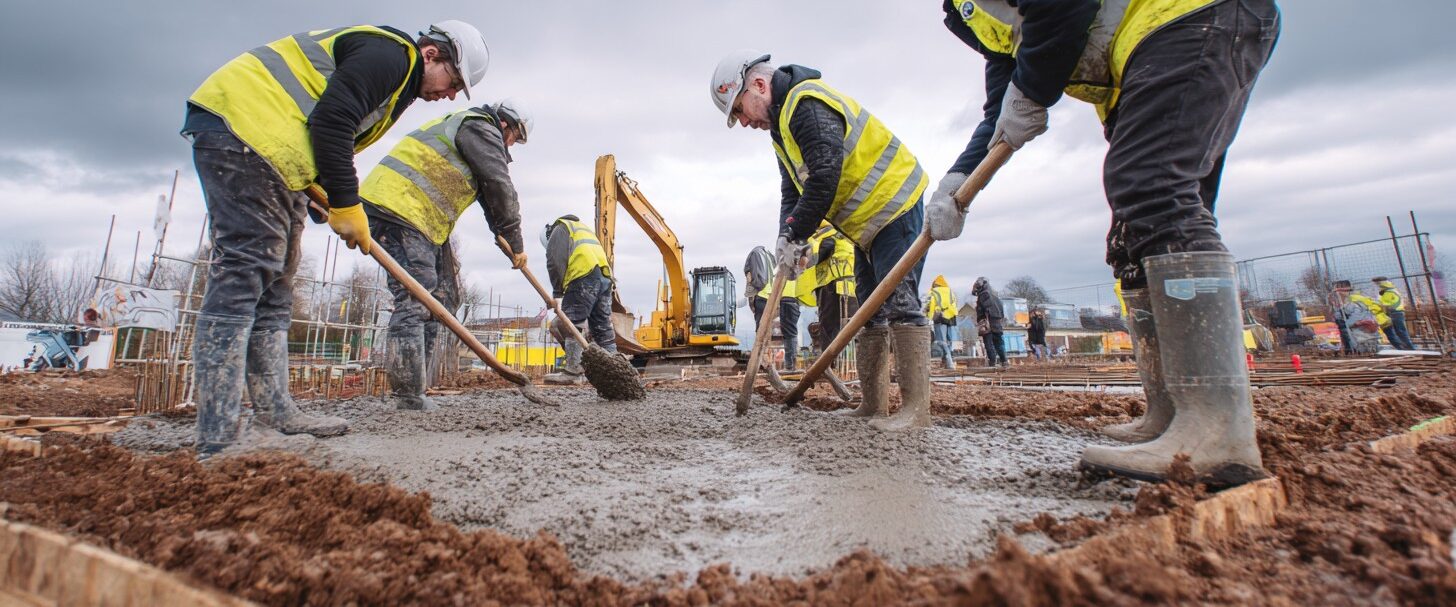
Many urban regeneration projects rely on civil engineering to guide you through assessment of ageing infrastructure, remediation of contaminated sites, design of resilient flood defences, upgrades to transport networks and the integration of sustainable technologies, ensuring your schemes deliver safety, capacity and long‑term value for communities.
Key Takeaways:
- Revitalising infrastructure and services-upgrading transport links, utilities and public spaces to improve mobility, safety and urban functionality.
- Embedding sustainable, resilient design-using low‑carbon materials, green infrastructure and flood defences to reduce environmental impact and adapt to climate risks.
- Coordinating with planners, communities and developers to phase works that stimulate economic activity, deliver affordable housing and strengthen social cohesion.
Understanding Urban Regeneration
Definition and Importance
When you examine regeneration, you focus on repurposing urban fabric to tackle decline, boost growth and improve liveability. In the UK, with over 80% of the population living in urban areas, projects often address derelict brownfield land, transport deficits and public realm decay. You must weigh social benefits like affordable housing against hazards such as contaminated sites and flood risk, ensuring interventions deliver long‑term resilience and measurable economic uplift.
Key Drivers of Urban Regeneration
You will encounter several recurring drivers: economic restructuring (post‑industrial job losses and private investment), policy levers (City and Town Deals, Enterprise Zones), demographic change and climate pressures. Examples include Canary Wharf and King’s Cross, whose large‑scale private investment spurred commercial growth; meanwhile policy incentives and public‑private partnerships often unlock otherwise unviable schemes.
Delving deeper, economic drivers often hinge on employment creation-Canary Wharf delivered tens of thousands of office jobs-while social drivers address housing shortages and inclusion, as seen in King’s Cross’s redevelopment of around 67 acres into mixed‑use neighbourhoods. Environmental drivers demand flood defences like the Thames Barrier and green infrastructure for cooling and drainage. You should quantify benefits (jobs, homes, transport capacity) and assess risks (soil contamination, subsidence, floodplain exposure) to prioritise engineering solutions.
The Role of Civil Engineering
As you move from planning to delivery, civil engineering translates ambition into technical reality: on the 67-acre King’s Cross regeneration engineers remedied contaminated ground and redesigned floodplains to meet 1-in-100-year rainfall standards, while strengthening foundations to mitigate subsidence risk for new structures. You will manage soil stabilisation, utility diversions and transport sequencing so that public safety is preserved and project phasing delivers measurable improvements in mobility and resilience.
Infrastructure Development
You coordinate the upgrade of ageing assets-relining Victorian sewers, upsizing water mains to increase capacity by up to 30% in peak demand zones, and redesigning junctions to cut peak delays by up to 20%. Practical work often reveals buried hazards (asbestos, legacy fuel tanks, gas mains) that force rapid redesign, so you must factor contingency, diversion routes and phased commissioning into contracts to keep services running during construction.
Sustainable Design Practices
You embed sustainability through SUDS, green roofs and permeable paving that can reduce peak runoff by up to 50%, plus district heating and energy-efficient lighting to lower operational emissions. Targets such as BREEAM Excellent or net-zero operational carbon by 2030 shape specification: specify local materials, demand lifecycle assessments and set embodied-carbon limits to avoid unintended increases from heavy concrete use.
In practice you deploy low-carbon concrete and recycled aggregates to cut embodied CO2 by up to 40%, and you require post-occupancy monitoring to verify performance. Use exemplar case studies-where district heating and combined heat-and-power reduced operational loads-or set mandatory LCA benchmarks in tender documents so contractors deliver measurable carbon and water savings across the project lifecycle.
Case Studies in Urban Regeneration
You can trace how civil engineering interventions reshape cities by looking at specific projects that combined structural works, transport upgrades and public-space design to deliver measurable outcomes; these examples show where urban regeneration met engineering rigor, produced economic uplift and, in some cases, exposed flood or subsidence risks that you must mitigate in your own schemes.
- 1. King’s Cross Central (London) – 67 acres redeveloped; estimated investment £2bn; delivered ~2,000 new homes and space for ~20,000 jobs; major works: rail junction remodelling, remediation of contaminated land and new utility corridors by multidisciplinary civil engineering teams.
- 2. HafenCity (Hamburg) – ~157 hectares of former port land; planned ~12,000 dwellings and up to 45,000 jobs; engineered flood defences and raised infrastructure levels to manage sea-level exposure, demonstrating large-scale climate adaptation in urban regeneration.
- 3. Guggenheim Effect (Bilbao) – museum investment (~US$100m) triggered wider regeneration; annual visitors rose to ~1 million within a decade; civil works included riverbank stabilisation and new transport links that amplified tourism and local GDP.
- 4. London Olympic Park (Queen Elizabeth) – legacy regeneration converting the 2012 site into mixed-use neighbourhoods; public and private investment estimated in the low billions; engineers delivered new floodplain management, brownfield remediation and 25-30% uplift in local transport capacity.
- 5. Medellín (Comuna interventions) – integrated transport (Metrocable) and public-space engineering reduced travel times over steep terrain and supported social inclusion; homicide rates fell sharply over two decades, illustrating how targeted infrastructure can underpin social regeneration.
Successful Civil Engineering Projects
You should study projects where infrastructure sequencing enabled rapid delivery: for example, staging utilities and roads first at King’s Cross allowed developers to deliver 2,000 homes while civil teams completed rail and drainage upgrades, generating early revenue and reducing construction risk for subsequent phases.
Lessons Learned from Failures
You must account for hidden ground conditions and unresolved liabilities: several stalled schemes failed because contamination, unmodelled groundwater or unresolved land-title issues escalated costs by 20-40%, showing that insufficient upfront geotechnical and legal due diligence threatens both timelines and budgets.
Digging deeper, you ought to incorporate robust risk transfer and monitoring: adopt contingency modelling, phased remedial contracts and real-time instrumentation to detect settlement or water ingress early; projects that implemented these controls reduced unexpected variation by an estimated 30-50%, lowering the likelihood of major overruns and preserving social licence to operate.
Stakeholder Engagement
Effective stakeholder engagement ensures you align engineering interventions with local needs; for example, King’s Cross Central (67 acres/27 ha) used staged consultations that engaged hundreds to thousands of residents, businesses and NGOs to shape transport and public realm outcomes. Early workshops and transparent reporting help you prioritise interventions, while targeted surveys and site visits flag safety-critical issues and help mitigate displacement and gentrification.
Collaboration with Local Communities
Through participatory design workshops, charrettes and digital platforms you gather lived experience to inform technical choices; GIS mapping and resident heatmaps often reveal pedestrian desire lines missed by engineers. Deploy household surveys of hundreds and place-based pilots to test solutions, and secure community benefit agreements that commit to jobs, training and local procurement to deliver measurable social value.
The Role of Government and Private Sector
Local authorities typically assemble land, set planning policy and provide enabling infrastructure, while private developers supply capital and delivery expertise; funding mixes commonly range from 30-70% private investment depending on project risk. You must manage procurement risk, long-term maintenance liabilities and political change, since cost overruns or planning delays can jeopardise viability if contractual safeguards are weak.
In practice you negotiate planning obligations (Section 106 or similar), affordable housing targets (commonly 20-30% in UK schemes) and delivery milestones; use clear performance bonds, phased funding tranches and maintenance contracts to enforce standards. Case examples like Argent at King’s Cross show how tight masterplans, public realm commitments and legally binding obligations can align private returns with public outcomes when you secure robust legal and financial frameworks.
Challenges in Urban Regeneration Projects
You face overlapping challenges: fragmented stakeholders, legacy contamination and complex utilities, plus planning delays and funding gaps. Technical phasing and heritage constraints often add time and cost. For design-led, low-carbon outcomes you should consult sources such as Engineering a Sustainable Future: Urban Regeneration & Climate-wise Design. In many schemes delivery times extend by 18-36 months and practical completion risks remain high.
Environmental Concerns
You deal with contaminated brownfield land, habitat loss and increased urban heat, all of which affect health and long-term viability. Remediation often uncovers asbestos, heavy metals or hydrocarbons; health risks and disposal costs escalate. Flood resilience must be designed in-HafenCity demonstrates how elevated defences and adaptive public realm reduce risk-while biodiversity net gain targets (typically 10%) force design trade-offs and land take.
Financial Constraints
You confront fragmented funding, rising construction costs and viability gaps that stall delivery. Public coffers are limited and private investors demand clear returns; bids often falter when land remediation pushes costs up. Expect contingency requirements of 10-15%, and that securing multi-source finance-grants, developer equity, and borrowings-will be central to project viability.
You should structure financing through phased delivery, capturing uplift via land value capture, S106 contributions and targeted tax-increment approaches where applicable. Case evidence: King’s Cross attracted over £2bn of private investment on a 67-acre site after major public infrastructure upgrades, showing how public seed funding can de-risk schemes. Model cashflows, stress-test for 20-30% cost inflation and secure long-term revenue mechanisms such as retained assets or ground rents.
Future Trends in Civil Engineering for Urban Regeneration
As you plan regeneration schemes, expect accelerating urbanisation-the UN forecasts that by 2050 about two-thirds of the world will live in cities-driving demand for integrated design, net-zero targets and adaptive infrastructure; consult resources like How Urbanisation is Driving Demand for Civil Engineers … to align your projects with market trends and policy shifts toward resilience and digital delivery.
Technological Innovations
You will find BIM adoption (UK public projects mandated to BIM Level 2 since 2016) and digital twins-such as Virtual Singapore-transforming delivery; modular construction can cut on-site time by up to 50%, while IoT sensors and AI-driven asset management have shown maintenance savings of around 15-25%, enabling you to predict failures and extend service life economically.
Resilience and Adaptability
Your designs must assume greater climate volatility: plan for sea-level rise of up to 1 metre by 2100 in high-emission scenarios and steeper rainfall peaks; deploying SUDS that cut peak runoff by 40-50% alongside movable barriers and elevated public realm will make regeneration schemes robust and multifunctional.
Delving deeper, you should combine hard and soft measures-Thames Estuary 2100-style strategic planning, Dutch Room for the River interventions and Rotterdam’s water plazas show how storage, controlled inundation and public amenity coexist; in practice, specify modular flood defences with 50-100 year design lives, integrate green corridors for heat mitigation (reducing urban temperatures by several degrees locally) and use phased, reversible interventions so your project can be adapted as projections change, thereby reducing long-term cost and safeguarding communities against extreme events.
Final Words
As a reminder, civil engineering guides urban regeneration by assessing structural needs, upgrading infrastructure, integrating sustainable design and coordinating multidisciplinary teams so you can transform ageing districts into resilient, efficient and accessible places; your role as planner or stakeholder is supported by engineers who deliver lasting solutions that balance heritage, mobility and environmental goals, improve public health and stimulate economic growth through technically sound, cost‑effective interventions.