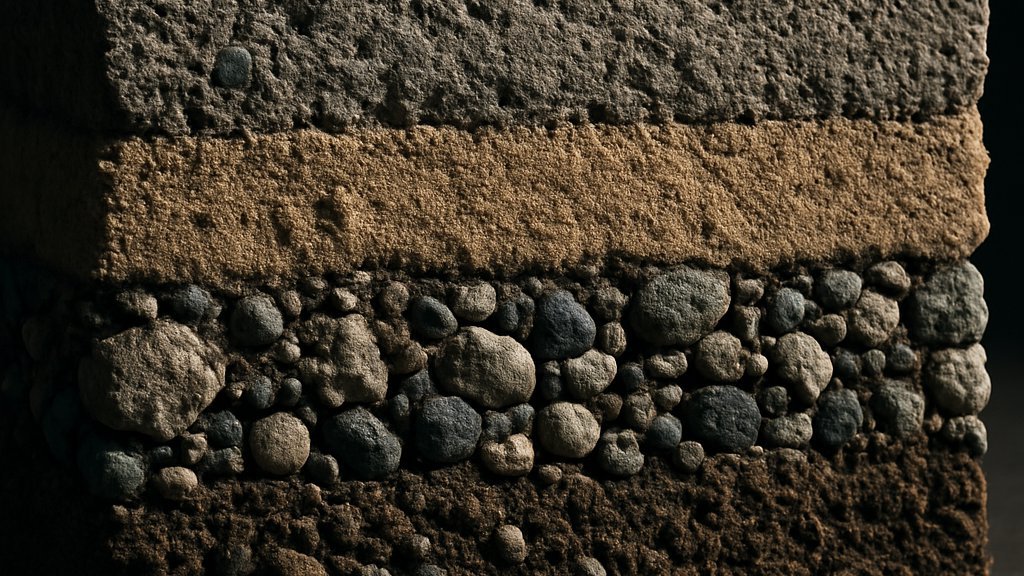
Sustainable Drainage Systems, commonly abbreviated as SuDS, have become standard on UK housing developments in response to Environment Agency guidance and, more recently, Schedule 3 of the Flood and Water Management Act as it is being implemented. Every new housing scheme of meaningful size includes SuDS attenuation as part of its drainage strategy. Getting the design right, the adoption process managed, and the long-term liability position clarified is one of the more consistent commercial exposures for housing developers.
The technical function of SuDS attenuation is straightforward. Surface water runoff from the development is captured in storage features (attenuation basins, oversized pipes, permeable paving, swales) and released slowly into the receiving watercourse or sewer at a controlled rate. That controlled release protects the downstream system from the peak flows that intense rainfall on impermeable urban surfaces would otherwise produce.
The design of the attenuation is calculated against the hundred-year rainfall event, with allowance for climate change. The storage volume required is significant, particularly on schemes with high impermeable surface areas. Getting the calculation right at design stage is essential because retrofitting additional attenuation after the scheme is built is expensive and disruptive.
For developers, the more complex question is who adopts and maintains the SuDS over its long service life. Some SuDS features can be adopted by the water authority under a Section 104 agreement. Others may be adopted by the local authority as public open space. Others may remain in private ownership, either with a management company or, in the case of smaller schemes, with individual homeowners.
The adoption route affects the design specification, the construction standards, the inspection regime, and the developer’s long-term liability. A SuDS feature designed for water authority adoption has to meet specific technical requirements. One designed for local authority adoption may have different landscaping requirements. One left in private ownership needs a management arrangement that will actually deliver maintenance across decades.
GCE’s engagement with housing developers on SuDS-heavy schemes includes the adoption strategy at design stage rather than at scheme completion. Where the water authority will adopt certain features, the design and construction is aligned to their standards from the outset. Where the local authority is the adoption route, the same applies. Where private management is the arrangement, the design accounts for the maintenance regime that will actually be delivered.
The long-term liability position is the item developers most consistently underestimate. A SuDS feature left in private ownership without an adequate management arrangement is a future liability. If it fails, the developer’s warranty position, the management company’s obligations, and the homeowners’ interests all become entangled. Litigation follows. The cost of resolving these situations is materially larger than the cost of getting the arrangement right at the outset.
There is also a Schedule 3 dimension worth flagging. As Schedule 3 of the Flood and Water Management Act 2010 is progressively implemented across the UK, the SuDS Approving Body process becomes mandatory for new development in the areas where it applies. Where Schedule 3 is in force, the developer’s SuDS design has to be approved before commencement and adopted after construction. The process adds time to the scheme and adds specific technical requirements.
For QSs and developers working on schemes in Schedule 3 areas, the practical advice is to engage the SuDS Approving Body early and to design against their requirements from the outset. Late engagement produces variations and, in some cases, redesign work that could have been avoided.
GCE’s regional experience across the East of England and the South East includes documented working relationships with the water authorities and the SuDS Approving Bodies in the relevant areas. That regional familiarity means the SuDS strategy on a new scheme is aligned with the approving authority’s expectations from the outset, and the adoption process typically runs to plan.
Talk to Globe Civil Engineering To discuss sustainable drainage systems on your housing scheme on your scheme, contact Globe Civil Engineering on 01223 890727 or email enquiries@theglobegroup.co.uk.