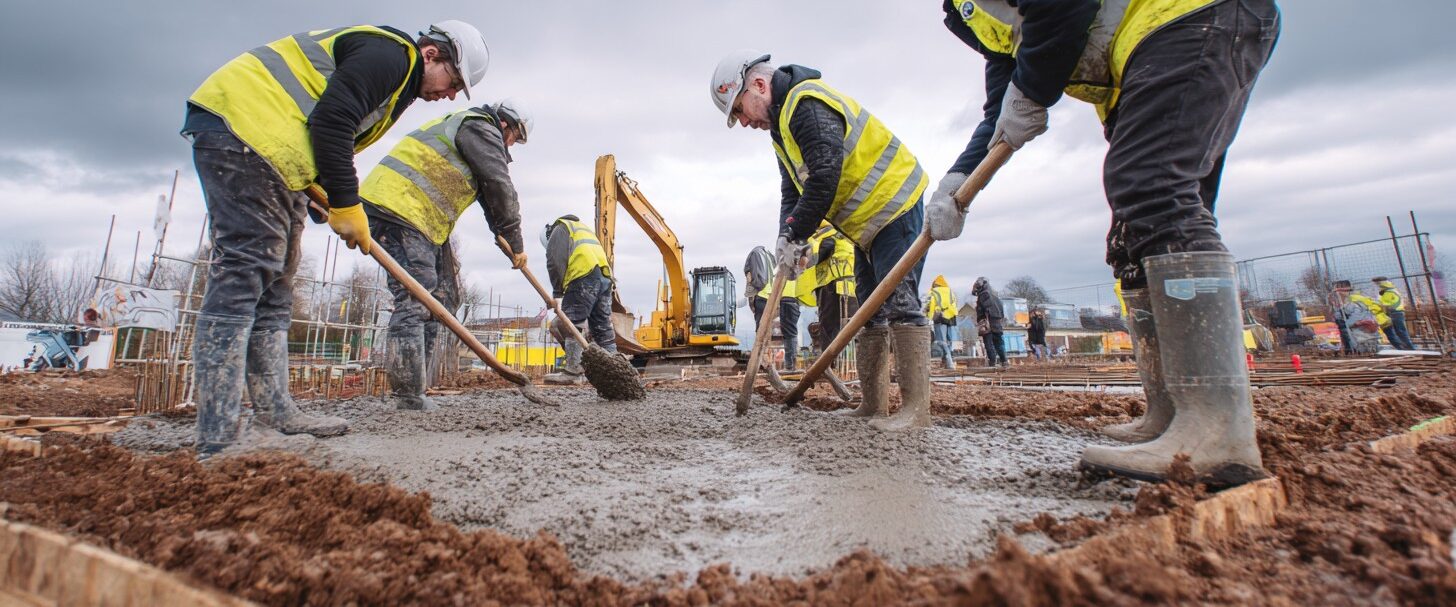
Across the UK housing market, defects originating in the groundworks package are statistically the most expensive defects developers and warranty providers face. The reasons are mechanical. Groundworks sits beneath everything that follows. Once buried, formation work, drainage, services and foundations cannot be inspected without exposing them. Remediation requires demolition of the work above.
The cost asymmetry between getting groundworks right at first installation and remediating later is significant. A formation level that is one degree out at first pour can be corrected for a few hundred pounds. The same defect discovered three years later, after the building above has been completed and occupied, costs tens of thousands of pounds to remediate and may extend to the displacement of occupants while the remediation occurs.
Drainage defects show the same asymmetry. A drainage fall set wrong during first installation costs almost nothing to correct at the time. The same fall failing in service after a decade can require excavation under driveways and gardens that were laid over the original installation, with all the disruption that implies.
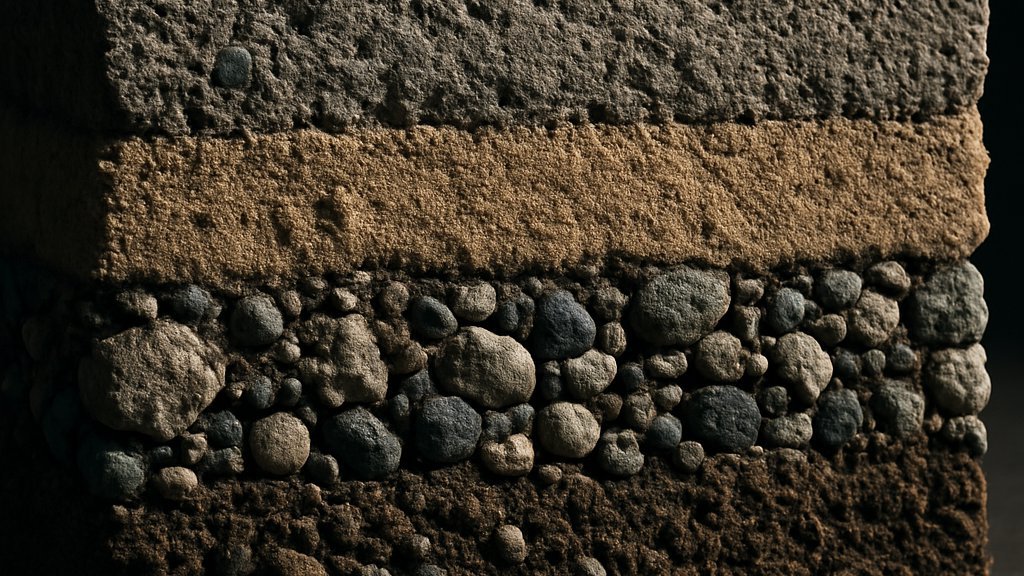
The same logic applies to ground stabilisation, sub-base compaction, foundation depth, and the interaction between foundations and ground conditions. Each is best done right first time. Each becomes expensive to remediate later. None of this is exotic engineering. It is the practical reality of working with ground.
For developers and warranty providers, the consequence is that the groundworks contractor’s standard of execution carries disproportionate weight in the overall risk position. A first-rate groundworks contractor reduces the developer’s defect liability across the warranty period by an amount that is usually much larger than the cost premium of that contractor over the lowest tender.
GCE’s quality management process treats groundworks as the high-leverage point it is. ISO 9001 certification supports a documented inspection regime at every critical stage. Formation depth is measured against design and recorded. Sub-base compaction is tested and documented. Drainage falls are confirmed before backfill. Foundation work is inspected against the structural drawings.
The documentation that results from this process is not a paperwork exercise. It is the evidence trail that protects the developer if a defect emerges in the warranty period or beyond. A drainage failure ten years after handover that can be referenced back to a documented installation record is a defect the warranty system can resolve. The same failure with no documented installation record becomes the developer’s problem to solve.
For QSs reviewing groundworks tenders, the documentation practice of the bidder is one of the strongest signals of overall execution quality. A bidder who can produce sample install records from a recent comparable scheme is a bidder whose own internal QC works. A bidder whose records are vague or generic produces work whose quality is more variable than its references suggest.
There is also a procurement question about how much of the groundworks scope is delivered by the main contractor versus sub-let to specialist installers. GCE’s practice is to deliver the main groundworks scope with directly employed crews and to sub-let only specialist activities where a specialist contractor genuinely has more expertise. The documentation discipline applies across the chain regardless.
For developers, the practical lesson is that groundworks is the package where the lowest tender is most often the worst outcome. Other packages can absorb some quality variation without long-term cost. Groundworks cannot. The cost asymmetry between right-first-time and later-remediation argues strongly for procuring on quality evidence rather than price. The arithmetic across the warranty period is one-sided.
Talk to Globe Civil Engineering To discuss groundworks failures and developer exposure on your scheme, contact Globe Civil Engineering on 01223 890727 or email enquiries@theglobegroup.co.uk.