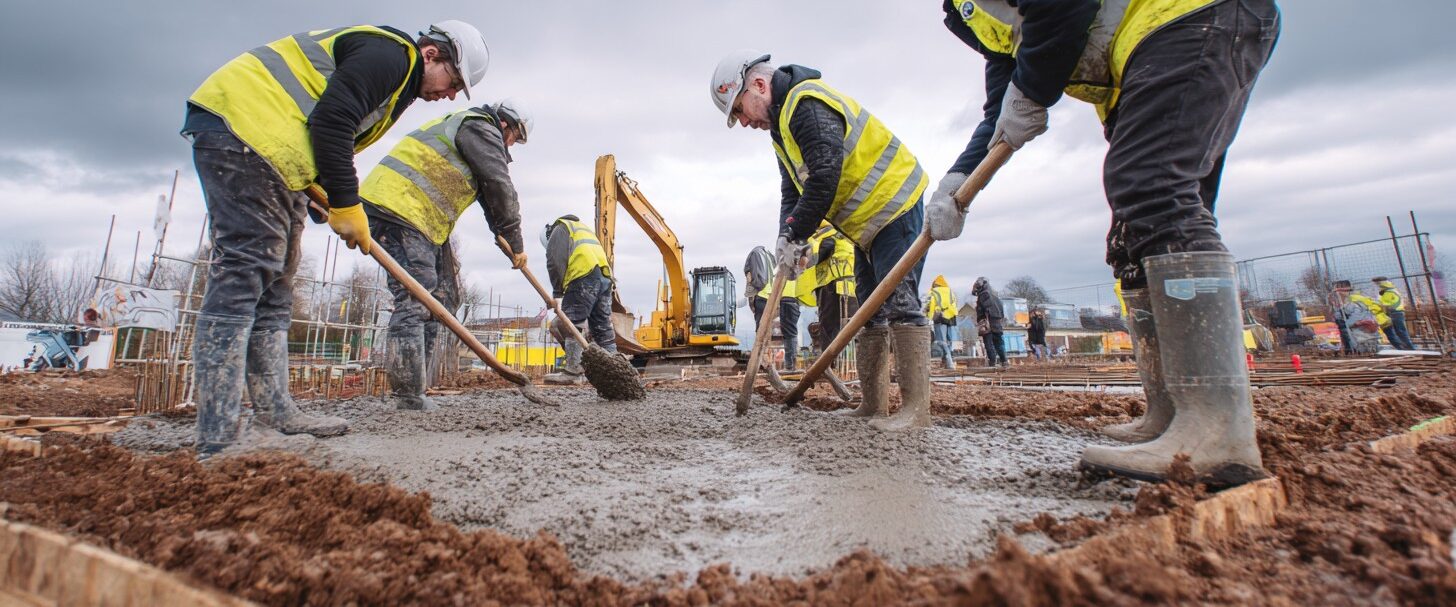
Groundworks sits early on the construction phase plan and carries disproportionate residual risk under CDM 2015. The principal contractor’s exposure begins the moment ground is broken. Excavations, plant movement, services interaction, temporary works and the public interface with the site all sit inside the groundworks programme, and most of them carry the kind of risk profile that draws scrutiny if anything goes wrong.
The principal contractor’s duty here is not to do the work themselves. It is to ensure that the work is planned, sequenced and resourced in a way that controls the risk before it is realised. In practice, that depends heavily on the groundworks contractor’s own approach. A groundworks subcontractor that arrives with thin RAMS, generic method statements and operatives whose specific competence cannot be evidenced creates a CDM problem for the principal contractor on day one.
Globe Civil Engineering operates with that exposure top of mind. RAMS for each task on the package are written specifically for the site, with reference to the actual ground conditions, the actual plant being used, the actual services present and the actual sequencing the programme requires. Generic documents are not issued. Each operative’s competence for the specific tasks they will perform is evidenced before they begin work, not after.
This matters most at the points where groundworks interfaces with other duties. Excavation near buried services requires both the groundworker’s competence and the principal contractor’s evidence that services information has been requested, received and incorporated into the work plan. GCE supplies its own evidence chain for this, but in a format that drops cleanly into the principal contractor’s pre-construction file rather than requiring re-formatting.
Plant operation is another area where the documentation needs to be tight. CPCS and NPORS certification is checked, recorded and held in the site file. Plant inspections are recorded daily before operation, not weekly in arrears. Refuelling, lifting operations and ground bearing assessments for tracked plant are managed against site-specific arrangements rather than generic ones.
Temporary works on a groundworks package, including excavation support, propping and load-bearing arrangements for crane standings, are designed and signed off by a competent temporary works coordinator. GCE manages this internally rather than relying on the principal contractor to source designs. The temporary works register that supports the package is produced in a format that aligns with the principal contractor’s wider register, so the site has one document rather than two.
There is also a subcontractor question that often comes up on groundworks. Where part of the package is delivered by sub-tier specialists, the principal contractor needs to see the same competence and documentation discipline applied to those operatives as to the main contractor’s own. GCE manages its sub-tier supply chain to the same standard it manages itself, and the documentation comes through pre-validated rather than passed straight through.
For developers, the practical implication is that the choice of groundworks contractor materially affects the principal contractor’s risk position. A groundworks contractor whose CDM approach is weak transfers cost and risk back up the chain. A contractor whose CDM approach is strong reduces the principal contractor’s effort and the developer’s residual exposure.
This becomes especially important on schemes where the principal contractor role sits with the developer’s own project management team rather than with a separate main contractor. In that arrangement, the developer is directly carrying the principal contractor duties under CDM. The groundworks contractor’s documentation effectively becomes part of the developer’s own CDM file. A contractor whose paperwork is solid frees the developer’s project team. A contractor whose paperwork is weak consumes it.
For procurement, the question worth asking at tender stage is not whether the groundworks contractor holds the relevant accreditations. Most contractors at this level do. The question is what their documentation looks like in practice, in the format the principal contractor will receive it, before the package starts. Asking to see a sample pre-start document set from a recent comparable scheme will tell a developer more about the contract risk than any tender rate ever will.
Talk to Globe Civil Engineering To discuss CDM-compliant groundworks delivery on your scheme on your scheme, contact Globe Civil Engineering on 01223 890727 or email enquiries@theglobegroup.co.uk.