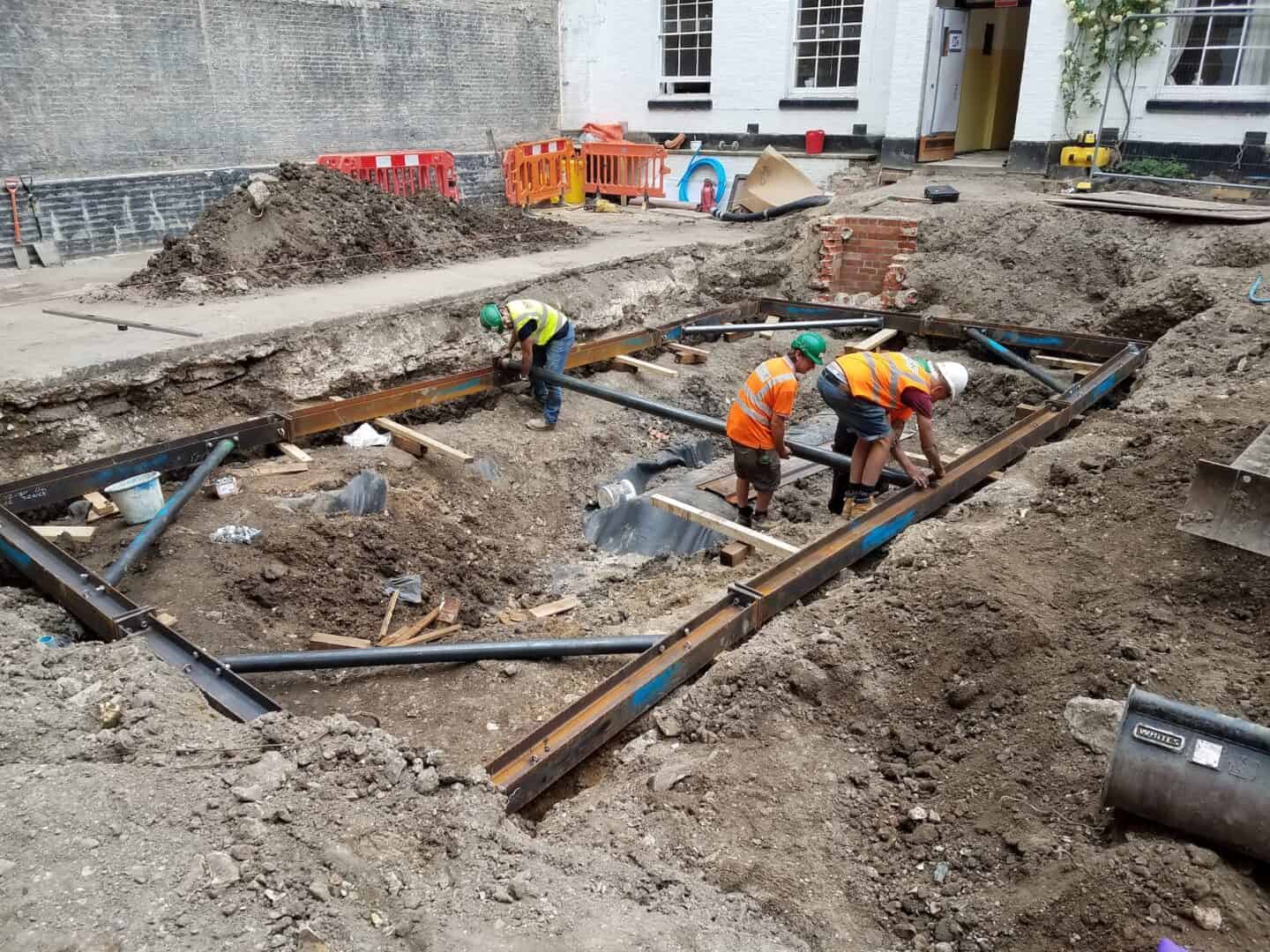
On a new build residential development, the groundworks and civil engineering package doesn’t happen in isolation. It happens within a programme that includes drainage adoption, highways works, scaffold, roofing, and the plot completions that drive the developer’s sales programme and cashflow. The sequencing of the civil engineering work determines how well — or how poorly — everything that follows it fits together.
Get the sequencing right and the programme flows. Drainage is installed and inspected before backfilling obstructs access. Roads are constructed in the right order to maintain site access throughout the programme. Scaffold mobilises when the formation is ready. Get it wrong and the consequences ripple through every subsequent package, creating delays that compound at each stage and ultimately push back the completion dates that matter most commercially.
For developers and principal contractors, sequencing is one of the most important things to assess when appointing a civil engineering subcontractor — and one of the things most likely to be underweighted in a procurement process focused primarily on price.
Why Sequencing Matters More on Phased Developments
On a single-phase development, sequencing is important but relatively straightforward — the civil engineering package has a defined start and a defined end, and the work is planned to get from one to the other in the most efficient order. On a phased development, sequencing becomes significantly more complex.
On a multi-phase scheme, the civil engineering programme is rarely complete on one phase before the next phase begins. Groundworks may be progressing on phase two while drainage adoption is being processed on phase one. Roads may be under construction on phase three while remedial works are being addressed on an earlier phase. The sequencing of all of those activities needs to be managed in a way that maintains progress across all active phases simultaneously, without the work on one phase obstructing or delaying the work on another.
Globe Civil Engineering plans the sequencing of civil engineering work on phased developments around the developer’s overall programme — plot release dates, NHBC inspection milestones, highways adoption timescales, and the mobilisation requirements of the scaffold and roofing packages that follow. That planning happens before the programme begins, not as a reactive response to conflicts as they arise.
Infrastructure Sequencing and Site Access
One of the most practically important sequencing decisions on a residential development is the order in which roads and access infrastructure are constructed. On a large site, constructing roads in the wrong sequence — closing off access routes before alternative routes are in place, or surfacing roads that will subsequently be used as haul routes by construction traffic — creates avoidable programme conflicts that take time and cost to resolve.
Globe Civil Engineering’s approach to infrastructure sequencing considers the full site logistics picture — which routes need to remain open throughout the programme, where construction traffic needs to access, and how the permanent road infrastructure can be built in an order that maintains site functionality throughout. That approach is particularly important on sites where the civil engineering and groundworks package overlaps with other trades — scaffold deliveries, roofing materials, and the general site traffic of a live residential development all need to be able to move around the site while the roads are still being built.
Drainage Sequencing and Inspection Windows
Drainage installation is one of the most sequencing-sensitive activities in the civil engineering programme. Drainage needs to be installed before the ground above it is occupied by other construction — but it also needs to be accessible for inspection and camera survey before it’s backfilled. Backfilling drainage before it’s been inspected is a quality assurance failure that creates significant risk later — drainage defects that aren’t identified before backfilling become drainage defects that require excavation to investigate and repair.
Globe Civil Engineering’s drainage installation programme is sequenced to maintain inspection windows at each stage — runs are installed and inspected before backfilling proceeds, and camera survey records are produced before the ground above is committed to the next stage of construction. That sequencing protects the drainage installation from the quality risks that come with premature backfilling, and produces the inspection records that support both NHBC sign-off and the drainage adoption process.
Coordinating Civil Engineering Sequencing With Subsequent Trades
On sites where Globe Civil Engineering works alongside Globe Cambridge on the scaffold package, the sequencing of groundworks completion and scaffold mobilisation is coordinated between the two divisions. Globe Cambridge needs the formation to be at the right stage before scaffold can be erected — and the information about when each area of the site will be ready flows from Globe Civil Engineering’s programme to Globe Cambridge’s mobilisation planning.
That coordination — which on a site with separate, unrelated civil engineering and scaffold contractors would depend entirely on the principal contractor to manage — happens within the Globe Group. The sequencing decisions that affect how the two packages interlock are made with both divisions’ requirements in mind, not negotiated between independent businesses after the fact.
To discuss civil engineering sequencing and programme management on your next development, contact Globe Civil Engineering today.